
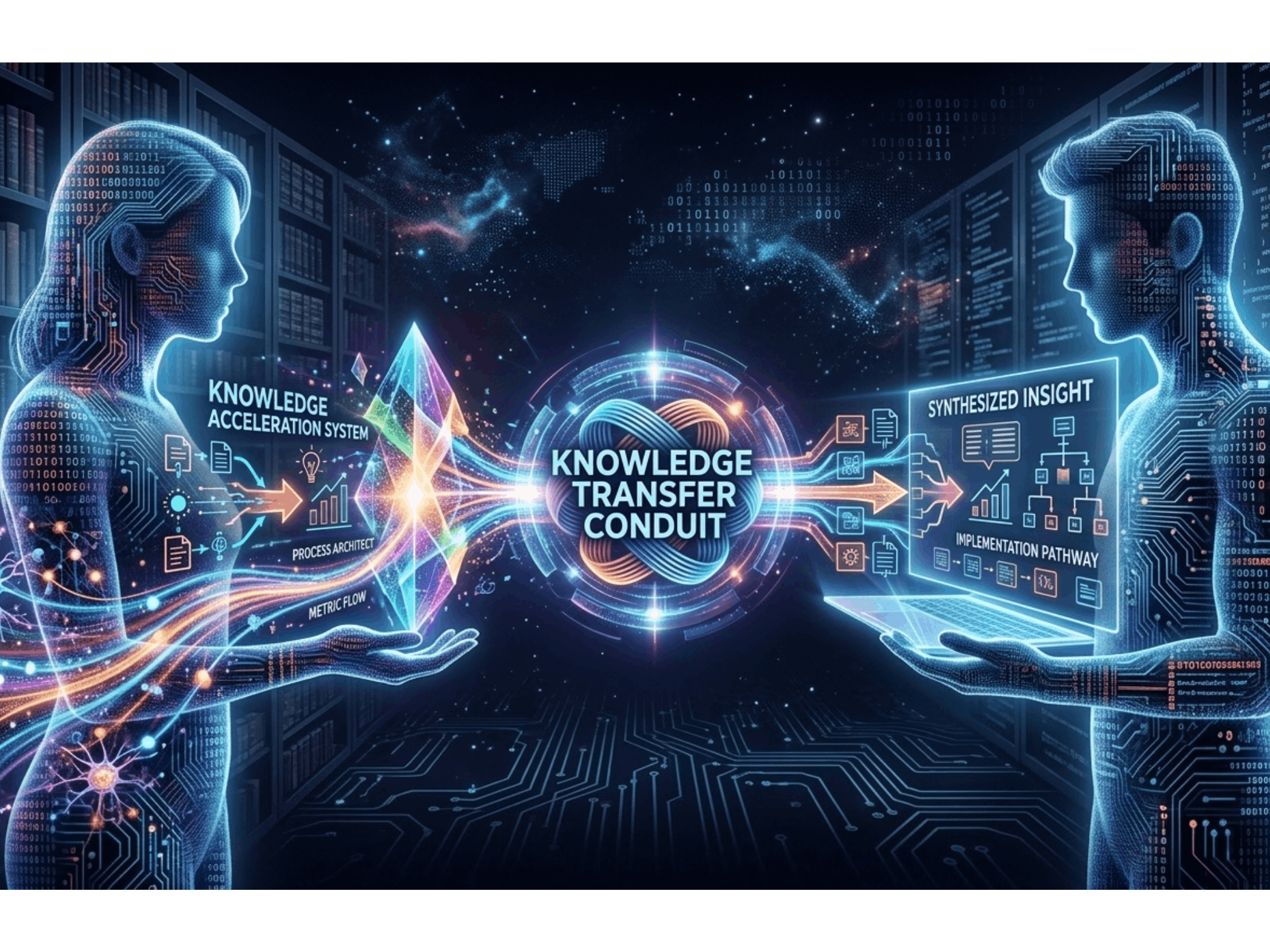
Every growing company eventually encounters the same invisible bottleneck.
A new hire cannot find the right documentation. A senior employee leaves, and critical context disappears. Teams repeat work that was already done months ago because the decision history is buried somewhere no one can easily access.
If you have searched for "how to improve knowledge transfer," "how to reduce new hire ramp time," or "best knowledge management system for growing teams," you are likely experiencing this firsthand.
Knowledge transfer does not fail because companies lack information. It fails because information lacks structure.
Documentation Is Not the Same as Knowledge Management
Most organizations already have documentation. Google Drive folders, Notion pages, onboarding guides, LMS exports, product documentation, and recorded walkthroughs. Some even implement enterprise knowledge management software.
Yet employees still struggle to find answers quickly.
Why?
Because storing documents is not the same as managing knowledge. Traditional documentation systems are static. They require employees to know what they are looking for and where it lives. In fast-moving teams, that assumption rarely holds.
AI knowledge management systems are emerging to address this gap.
The goal is not just to store files, but to create an intelligent knowledge base that makes institutional knowledge searchable and contextual. Without structure, documentation becomes digital clutter.
The Hidden Cost of Tribal Knowledge
Tribal knowledge often feels efficient. You simply "ask the person who knows." But as companies grow, this model becomes increasingly fragile. When knowledge lives in individuals rather than in a structured enterprise knowledge platform, you create single-point risk. If that person leaves, takes time off, or changes roles, context disappears.
Searches for "how to prevent knowledge silos" or "AI for knowledge transfer" are often rooted in this exact pain point. Institutional memory should not depend on memory alone.
Why the Employee Onboarding Process Feels Overwhelming
Onboarding in modern organizations can feel like stepping into the middle of a complex system without a clear map. New hires receive dozens of documents, recorded sessions, org charts, and policy guides. The assumption is that exposure equals understanding.
But without an AI-powered onboarding structure, new employees spend more time navigating documentation than absorbing it.
Companies searching for "AI for employee onboarding" or "how to reduce onboarding ramp time" are often trying to solve this friction problem. Effective onboarding requires searchable institutional knowledge that connects documentation to role-specific workflows.
Otherwise, new hires are left piecing together context manually.
Cross-Functional Gaps and AI Documentation Management
As organizations scale, knowledge silos form naturally. Engineering documents processes one way. Sales documents them another. Compliance stores regulatory frameworks separately. Each team operates with partial visibility.
Without AI documentation management that connects these systems, cross-functional collaboration slows down. Employees rely on meetings and Slack threads to fill gaps that should be covered by a unified knowledge management system.
Over time, this increases operational drag and reduces alignment.
What Modern Knowledge Transfer Requires
Organizations that successfully improve knowledge transfer tend to move beyond static documentation.
They implement systems that:
- Centralize documentation into an intelligent knowledge base
- Preserve decision rationale alongside outcomes
- Enable searchable institutional knowledge across teams
- Support AI-driven workforce training and onboarding
- Reduce friction in finding context
The focus shifts from storing information to making it accessible and usable. AI knowledge management plays a role here not by replacing documentation, but by structuring it.
From File Storage to Institutional Memory
If you are searching for "AI knowledge management for enterprises" or "how to improve documentation management," you are likely not trying to create more documents.
You are trying to reduce friction.
Knowledge transfer breaks down when documentation is scattered, context is lost, and retrieval requires too much effort. When organizations move toward intelligent, AI-supported knowledge systems, documentation becomes more than archived files. It becomes living institutional memory.
And institutional memory is what allows companies to grow, onboard faster, and scale without losing the context that made them effective in the first place.