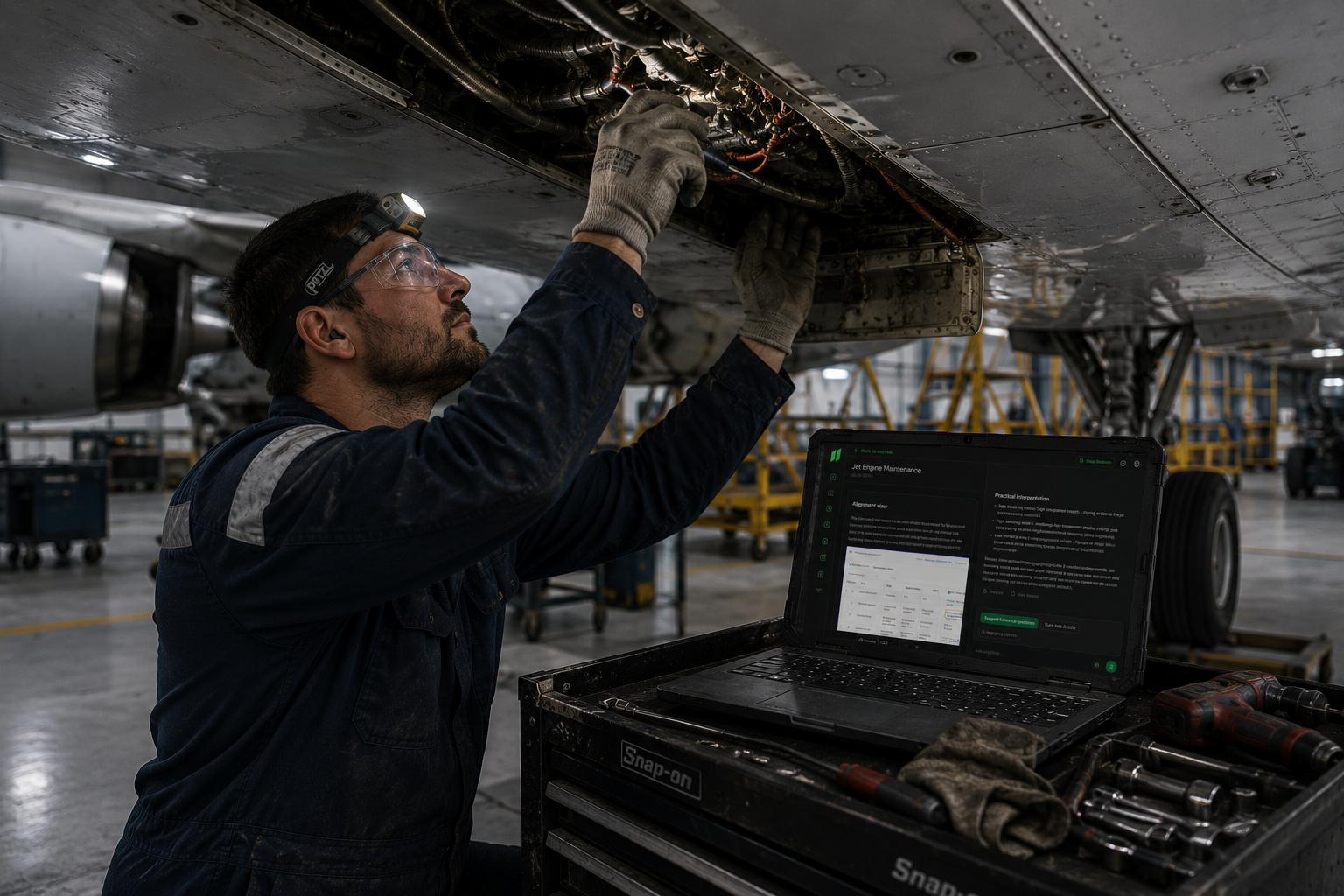
// Commercial Aviation Maintenance
Fault isolation in minutes. Cited to the manual.
AI that understands line and base maintenance, the technical data behind the work, and what a delayed departure costs.
Implicit makes all of it retrievable in seconds, with the task number and the revision in effect attached to every answer.

Q: ECAM shows a BLEED 1 FAULT on a gate turn. What is the fault isolation path before we consider dispatch under MEL?
Isolate to the bleed monitoring computer before any component removal. Confirm the reported fault code in the fault isolation task, then verify the applicable MEL relief and its operational and maintenance procedures before release.
Implicit understands what a technician is actually asking, then returns the procedure from your approved technical data with the task number and revision attached. Answers come only from the documents you loaded, so there is nothing to second-guess and nothing to reverify by hand.
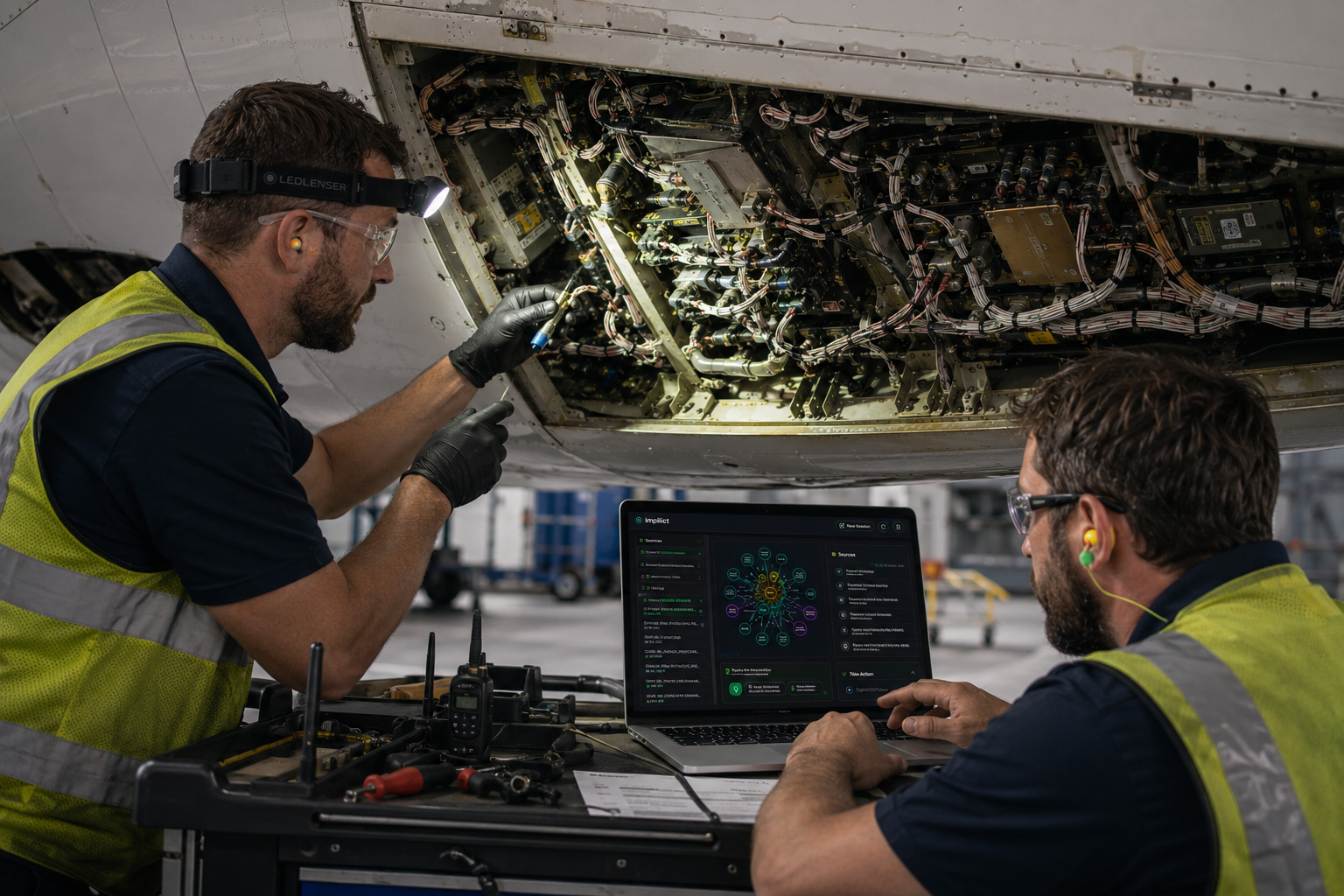
Implicit maps aircraft, effectivity, components, part numbers, fault codes, tools, and tasks across your entire library. Vision and OCR models read the wiring diagrams, exploded views, and torque tables inside manuals that generic AI tools skip over.
Shift Turnover · Line Maintenance
Drafted by Implicit
Bleed 1 fault traced to monitoring computer
Fault reproduced on two engine runs. Duct and valve checks passed, so the removal is staged against the computer rather than the valve.
Awaiting part from stores
Replacement unit requested against the IPC figure. Aircraft remains dispatchable under MEL relief until the part arrives.
Do not repeat
Duct pressure and valve position checks were completed this shift and passed. Start at the computer.
Implicit drafts the turnover from the work actually performed, so the incoming crew inherits what was found, what was ruled out, and what remains open. Fewer aircraft handed off mid-diagnosis with no trail, and fewer checks repeated because the last shift's reasoning was never written down.
Knowledge checks, flash cards, and plain-language explanations generated on demand from your own technical data. New hires study the fleets you actually operate and the procedures your stations actually use, instead of a generic syllabus that has to be translated on the floor.
Knowledge Check · Generated from your AMM
3 / 8During a bleed system fault isolation, what must be confirmed before a component is removed?
Why
Removing a component before the code is matched to the correct isolation task for that effectivity is the most common cause of a no-fault-found removal.
Source: AMM 36-11-00Load the AMM, FIM, IPC, SRM, CMM, service bulletins, airworthiness directives, engineering orders, and your own station procedures into one workspace. Implicit extracts the components and relationships automatically, so a single question draws on the full library instead of whichever PDF someone happened to have open.
Revision history, superseded-content alerts, and citations bound to the document version used at the time of the answer. When an auditor asks which technical data a decision was based on, the record already exists.
Source Record
In effectAMM 36-11-00
Pneumatic bleed air system, description and operation
Superseded content flagged
Service bulletin 36-0142 changes the torque value in this task. Answers drawing on revision 2026-01 were flagged for review and the older revision was archived.
The same cited answers reach technicians in the browser and reach your other systems through MCP and API. Your planning tools, assistants, and internal agents draw on approved technical data instead of building a second, ungoverned copy of it.
Ask in plain language on a laptop or tablet, get the procedure with the citation attached, and move on.
Maintenance planning tools, internal assistants, and agents query the same governed knowledge base you already approved.
Add a revision once and every consumer gets it, with the same citations and the same access rules.

Your manuals, procedures, and the questions your teams ask stay private and are never used to train models. Each workspace is isolated, and access is controlled by fleet, station, and role so people see the technical data their work requires.
Load a fleet's manuals and bulletins, then ask the questions your technicians ask on shift. Thirty days, no credit card.
Supporting a military or government fleet? Visit ImplicitForGov.com.